Understanding Different TMT Steel Grades in India
Thermo-Mechanically Treated (TMT) bars are widely used for reinforced concrete construction. Their manufacturing process produces a strong outer surface and a comparatively ductile inner core.
In India, reinforcement steel is available in different grades, including Fe 415, Fe 500, Fe 500D, Fe 550 and Fe 550D.
The number in a steel grade represents its minimum yield strength in MPa, while the letter D indicates enhanced ductility requirements compared with the corresponding non-D grade.
Here is an overview of commonly available grades.
Fe 415 TMT Bars
Fe 415 is a reinforcement steel grade with a minimum yield strength of 415 MPa. It is an established grade used in various reinforced concrete applications.
Its suitability for a residential project depends on the structural design, load requirements and specifications provided by the structural engineer.
Fe 500 TMT Bars
Fe 500 TMT bars offer a minimum yield strength of 500 MPa. They are used in different types of reinforced concrete structures where the specified strength and material properties meet the design requirements.
They provide a higher yield strength than Fe 415 and can be considered for suitable residential and commercial construction applications.
Fe 500D TMT Bars
Fe 500D is a higher-ductility version of Fe 500. It combines a minimum yield strength of 500 MPa with enhanced elongation requirements.
This grade is commonly considered for residential construction because ductility is an important property in reinforced concrete structures, particularly where earthquake-resistant design requirements apply.
Fe 550 TMT Bars
Fe 550 has a minimum yield strength of 550 MPa. Its higher strength makes it suitable for structural applications where the design specifically requires this grade.
However, a higher strength rating does not automatically make it the right choice for every residential building.
Fe 550D TMT Bars
Fe 550D combines a minimum yield strength of 550 MPa with enhanced ductility requirements.
It can be used in structural applications designed for this grade. The structural engineer should determine whether its strength, ductility and other properties are appropriate for the project.
INDUS 555D TMT Steel: A High-Strength Reinforcement Option
When selecting the best steel for house construction, homeowners and builders should consider reinforcement steel that offers an appropriate combination of strength, ductility and concrete bonding.
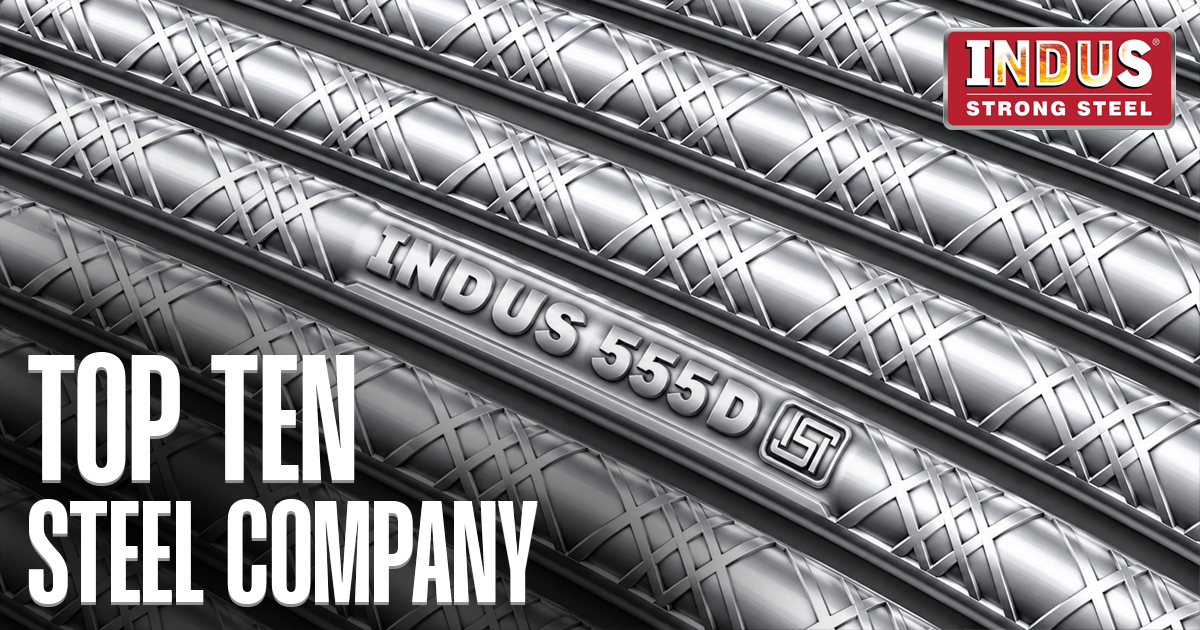
INDUS 555D is a TMT steel product designation associated with the Fe 550D grade. It is a reinforcement option for construction projects where Fe 550D steel is specified by the structural design.
The product combines high yield strength with enhanced ductility requirements, making these properties important considerations for residential and other reinforced concrete applications.
Key Features of INDUS 555D TMT Steel
1. High Yield Strength
INDUS 555D is associated with the Fe 550D grade, which has a minimum yield strength of 550 MPa. This strength level provides a reinforcement option for structural applications designed for Fe 550D steel.
2. Enhanced Ductility
Ductility is an important property of reinforcement steel. It allows steel to undergo deformation before failure. This is particularly relevant for buildings designed to resist earthquake-related forces.
3. Concrete Bonding
The ribbed surface of TMT reinforcement helps improve mechanical bonding between steel and concrete. Proper bonding supports the combined performance of reinforcement and concrete in structural elements.
4. Controlled Material Properties
Chemical composition influences the strength, ductility and weldability characteristics of steel. Manufacturers should maintain the required chemical and mechanical properties according to applicable standards. Buyers should verify these details through current product datasheets and material test certificates.
5. Suitable Structural Applications
Depending on the structural design, INDUS 555D TMT steel can be considered for:
- Residential building foundations
- Reinforced concrete columns
- Beams and roof slabs
- Multi-storey residential structures
- Other reinforced concrete construction projects
The grade, diameter and quantity of reinforcement should always follow the structural engineer's specifications.
Why Consider INDUS 555D for House Construction?
A residential building requires reinforcement steel that meets the technical requirements of its structural design. INDUS 555D offers a high-strength Fe 550D reinforcement option for projects where this grade is specified.
When evaluating this product, buyers should consider its grade, BIS certification, mechanical properties, dimensional consistency and material test documentation.
Choosing the right reinforcement steel helps support the structural performance of a building when combined with proper engineering, concrete quality and construction practices.
Conclusion
Choosing the Best Steel for House Construction involves understanding different TMT grades, evaluating material quality and following the structural engineer's recommendations.
Grades such as Fe 500D and Fe 550D offer different strength and ductility characteristics. INDUS 555D, associated with the Fe 550D grade, is an option for construction projects where this reinforcement specification is suitable.
Before purchasing reinforcement steel, verify BIS compliance, mechanical properties, chemical composition, dimensions and material test certificates.
A well-planned construction project begins with informed material selection. By prioritising quality and following proper structural specifications, homeowners can make better decisions for building a strong and durable home.
Frequently Asked Questions (FAQs)
1. Which steel grade is best for house construction in India?
Fe 500D is a commonly considered grade for residential construction. Fe 550D is another option for projects requiring higher yield strength. The appropriate grade should be determined by the structural engineer.
2. Is Fe 500D suitable for house construction?
Fe 500D offers a minimum yield strength of 500 MPa and enhanced ductility requirements. It can be suitable for residential construction when specified in the structural design.
3. What is INDUS 555D TMT steel?
INDUS 555D is a TMT steel product designation associated with the Fe 550D grade. It offers a high-strength reinforcement option for construction projects where Fe 550D steel is specified.
4. Is Fe 550D better than Fe 500D?
Fe 550D has a higher minimum yield strength than Fe 500D. However, a higher strength rating does not automatically make it better for every building. Structural requirements and ductility specifications should guide the selection.
5. What is the importance of TMT bars in house construction?
TMT bars reinforce concrete and help structural elements withstand tensile forces. They are commonly used in foundations, columns, beams, slabs and other reinforced concrete components.
6. How can I identify good-quality TMT steel?
Check BIS certification, grade markings, mechanical test reports, chemical composition, dimensions and surface condition before purchasing TMT bars.
7. Which Indian Standard applies to TMT reinforcement bars?
IS 1786 is the Indian Standard covering high-strength deformed steel bars and wires for concrete reinforcement. Always verify the applicable edition and requirements.
8. Can INDUS 555D TMT steel be used for residential buildings?
INDUS 555D can be considered for residential buildings when its associated Fe 550D grade meets the structural engineer's design specifications. Always verify the product's technical documentation before purchasing.Start writing your technical article or paste content here...