What Should You Always Check Before Buying the Best Quality TMT Bar in India?
Before buying TMT bars, always check five things: strength, elongation, grade, rib pattern and unit weight. Compare each with the grade your engineer specified and the BIS standard, IS 1786. Then verify with the manufacturer's test certificate.
No.Always CheckHow Indus TMT Meets It1Strength: Yield and tensile strength for your gradeIndus TMT supplies Fe 550D with yield strength above 560 N/mm² and tensile strength above 650 N/mm².2Elongation: How much the bar stretches before it breaksIndus TMT elongation is above 17%.3Grade: Fe 550D or Fe 550, as your engineer specifiesIndus TMT supplies Fe 550D, with stricter elongation and chemical limits.4Rib pattern: The grip between steel and concreteIndus TMT's 3X ribs give horizontal and vertical grip.5Unit weight and size: Weight per metre, diameter and lengthIndus TMT bars are made to BIS weight and size requirements.
1. Always Check the Strength of the TMT Bar
Two strength values decide whether a TMT bar is safe: yield strength and tensile strength. The required numbers depend on the grade and on IS 1786, the Bureau of Indian Standards (BIS) specification for reinforcement steel. Always compare against your grade, not a general figure.
Yield strength is the stress at which steel starts to deform permanently. Tensile strength is the maximum stress a bar reaches before it breaks. Both are measured in N/mm², and each has a minimum value that depends on the TMT grade.
Think of a person carrying cement bags. One bag is comfortable. More bags add strain. Past a limit, the body is affected. A TMT bar behaves the same way. Beyond its yield point, it stays permanently deformed, yet it still carries more load until it finally breaks.
Minimum Strength Values by TMT Grade
TMT GradeMinimum Yield StrengthMinimum Tensile StrengthFe 500500 N/mm²545 N/mm²Fe 500D500 N/mm²565 N/mm²Fe 550550 N/mm²585 N/mm²Fe 550D550 N/mm²600 N/mm²
The grade number is the minimum yield strength, not the tensile strength. IS 1786 also requires tensile strength to exceed the actual yield strength by a set ratio: at least 6% for Fe 550 and 8% for Fe 550D. The higher of the two requirements applies.
What to Check (3 Easy Steps)
- Ask the seller for the test certificate of the batch you are buying.
- Find the yield strength and tensile strength on it.
- Compare both numbers with the minimum for your grade in the table above. Both must be equal to or higher than the required values.
For large orders, also send one sample for a Universal Testing Machine (UTM) test.
How Indus TMT Meets This: Indus TMT supplies Fe 550D grade TMT bars. The yield strength is above 560 N/mm² and the tensile strength is above 650 N/mm². Both are higher than the IS 1786 minimums for Fe 550D (550 and 600 N/mm²). Ask for the test certificate and compare the numbers yourself.
2. Always Check the Elongation of the TMT Bar
A strong bar must also stretch before it breaks. This property is ductility. In a building, ductile steel bends and gives visible warning instead of snapping suddenly. That matters during overloading and earthquakes.
Elongation is the percentage a TMT bar stretches over its gauge length before fracture. It is measured in a tensile test. Higher elongation means greater ductility, so the bar deforms gradually instead of failing without warning.
Picture a rubber band stretched from both ends. It stretches, then snaps. Steel stretches far less, but the principle holds. In the test, the bar is pulled from both ends. The increase over its original length, measured after fracture, is the percentage elongation.
Minimum Elongation by TMT Grade
TMT GradeMinimum ElongationFe 50012%Fe 500D16%Fe 55010%Fe 550D14.5%
What to Check (3 Easy Steps)
- Look at the test certificate for the line that says "elongation" or "% elongation".
- Compare that number with the minimum for your grade in the table above.
- Reject the batch, or ask for a retest, if the number is lower.
How Indus TMT Meets This: Indus TMT elongation is above 17%. That is higher than the 14.5% minimum that IS 1786 requires for Fe 550D, so the bar has more room to stretch before it fails.
3. Always Check the Grade: Why Choose Fe 550D Over Fe 550?
Many buyers see Fe 550 and Fe 550D and think they are the same. Both have a minimum yield strength of 550 N/mm². The letter "D" changes the requirements, so check which grade your structural engineer specified before you buy.
Fe 550D is a ductility-controlled TMT grade with 550 N/mm² minimum yield strength. Compared with Fe 550, IS 1786 requires higher elongation, a higher minimum tensile strength and tighter sulphur and phosphorus limits. It is commonly specified where ductile behaviour matters.
Fe 550 vs Fe 550D
What to CheckFe 550Fe 550DMinimum yield strength550 N/mm²550 N/mm²Minimum tensile strength585 N/mm²600 N/mm²Tensile strength above actual yield (minimum)6%8%Minimum elongation10%14.5%Sulphur and phosphorusLess strict than Fe 550D0.040% each, 0.075% combined
Why Fe 550D Matters
- Ductility and elongation: Fe 550D must stretch at least 14.5% before fracture, against 10% for Fe 550. A more ductile bar deforms before it fails, which gives visible warning.
- Tensile strength: The higher ratio means the bar keeps gaining strength after it yields.
- Chemical control: Excess sulphur and phosphorus can reduce ductility and harm mechanical performance. Fe 550D controls them more tightly.
What to Check (3 Easy Steps)
- Read the grade your engineer wrote in the drawing or bar schedule.
- Match it with the grade on your invoice and test certificate. If you need Fe 550D, it must say Fe 550D, not Fe 550.
- Confirm the certificate shows elongation of 14.5% or more for Fe 550D.
The Takeaway: Do not judge TMT bars on strength alone. Look for strength combined with ductility. Always follow the grade your structural engineer specifies.
How Indus TMT Meets This: Indus TMT supplies Fe 550D grade. Its values are higher than the IS 1786 minimums.
PropertyIS 1786 Minimum for Fe 550DIndus TMT Fe 550DYield strength550 N/mm²Above 560 N/mm²Tensile strength600 N/mm²Above 650 N/mm²Elongation14.5%Above 17%
Indus TMT Fe 550D also carries the 3X ribs for concrete bonding.
4. Always Check the Rib Pattern: Why Must 3X Ribs Be Preferred?
Ribs are the raised patterns on a bar's surface. They let concrete grip the steel, so the two materials share load and act as one structure. If the grip is weak, the bar can slip inside the concrete under load.
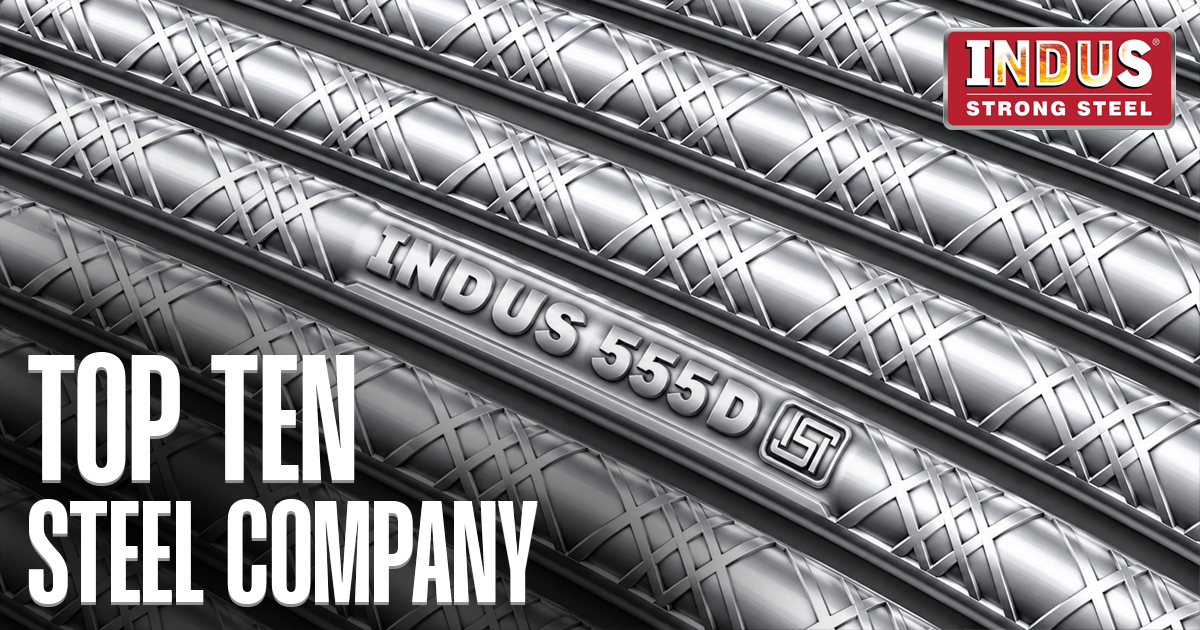
Concrete bonding is the grip between a TMT bar's ribs and the surrounding concrete. Ribs create mechanical interlock that resists slippage and transfers load between steel and concrete. Indus TMT's 3X ribs have horizontal and vertical ribs, so concrete grips the bar in more than one direction.
Why 3X Ribs Should Be Preferred Over Other Patterns
- Grip in more than one direction: Many bars use one rib style, such as L-shaped or C-shaped ribs. Indus TMT's 3X ribs combine horizontal and vertical ribs, so concrete locks against the bar from more than one direction.
- More surfaces to lock against: Horizontal and vertical ribs together give the concrete more points of contact along the bar.
- Better bonding: More interlock supports better bonding between steel and concrete.
- Better load transfer: When steel and concrete are well bonded, they work together across beams, columns and slabs.
Whatever the pattern, rib geometry must meet BIS requirements.
What to Check (4 Easy Steps)
- Look closely at the bar surface in good light.
- Find both horizontal and vertical ribs, not ribs in one direction only.
- See that the ribs are sharp, even and continuous along the full length, with no flat or worn patches.
- Confirm the bar carries the BIS mark.
How Indus TMT Meets This: The 3X rib pattern is a key Indus TMT advantage. Its horizontal and vertical ribs are designed for stronger grip with concrete.
5. Always Check the Weight and Size of the TMT Bar
The quantity on the delivery slip is not enough. An underweight bar means less steel in your structure than you paid for.
Unit weight is the mass of a TMT bar per metre of length. For a bar of diameter d in millimetres, nominal weight is:
Nominal weight = d² ÷ 162 kg per metre
A 12 mm bar weighs about 0.889 kg per metre. IS 1786 permits only limited tolerance.
What to Check (4 Easy Steps)
- Cut a measured length of bar, for example 1 metre.
- Weigh it on a calibrated scale.
- Calculate the nominal weight: diameter × diameter ÷ 162, in kg per metre.
- Compare your result with it. The difference must stay within the tolerance for that diameter in IS 1786.
Also check that the diameter matches the size you ordered and the length matches what was supplied.
How Indus TMT Meets This: Indus TMT bars are manufactured to BIS weight and size requirements, so you receive the steel you paid for.
Trust and Authority
After more than 30 years in steel manufacturing, the mistake we see most often is judging a bar by its grade stamp alone. A grade mark is a claim. A test certificate and a UTM result are proof.
Source: Bureau of Indian Standards, IS 1786 for reinforcement steel.
Frequently Asked Questions
1. Which Is the Best TMT Bar in India?
No single brand wins every project. The best TMT bar matches the grade your engineer specifies and passes strength, elongation, rib and weight checks with a valid test certificate.
2. What Are the Strength Values of Indus TMT Fe 550D?
Indus TMT Fe 550D has yield strength above 560 N/mm², tensile strength above 650 N/mm² and elongation above 17%. IS 1786 minimums for Fe 550D are 550 N/mm², 600 N/mm² and 14.5%.
3. Is Fe 550D Better Than Fe 500D?
Fe 550D has a higher minimum yield strength (550 vs 500 N/mm²). Fe 500D has a higher minimum elongation (16% vs 14.5%). Choose by your structural design, not by the number alone.
4. Why Are 3X Ribs Preferred?
Indus TMT's 3X ribs have horizontal and vertical ribs. They give concrete grip in more than one direction, which supports better bonding between steel and concrete.
5. How Can I Verify TMT Bars Before Buying?
Check the BIS mark, ask for the manufacturer's test certificate, look at the rib pattern, weigh a measured length, and send a sample for UTM testing on large orders.
6. What Does the 550 in Fe 550D Mean?
The number 550 is the minimum yield strength in N/mm². The letter D marks a ductility-controlled grade with stricter elongation and chemical limits.
7. How Do I Check the Unit Weight of a TMT Bar?
Weigh a measured length on a calibrated scale. Compare it with d² ÷ 162 kg per metre and the IS 1786 tolerance for that diameter.
Conclusion
The best quality TMT bar in India passes five checks. It meets the yield and tensile strength for its grade. It shows the required elongation. It matches the grade your engineer specified, such as Fe 550D. It has horizontal and vertical ribs for concrete bonding. It delivers the correct unit weight.
Indus TMT Fe 550D, with yield strength above 560 N/mm², tensile strength above 650 N/mm² and elongation above 17%, is made to pass each of these checks. Verify each point with a test certificate before you buy.
Call Now
Need help choosing the right TMT bars for your project? Call Indus TMT Industries Limited now and speak to our team about Fe 550D, test certificates and supply.
9242 777 777
About the Author
INDUS TMT INDUSTRIES LIMITED